Fido
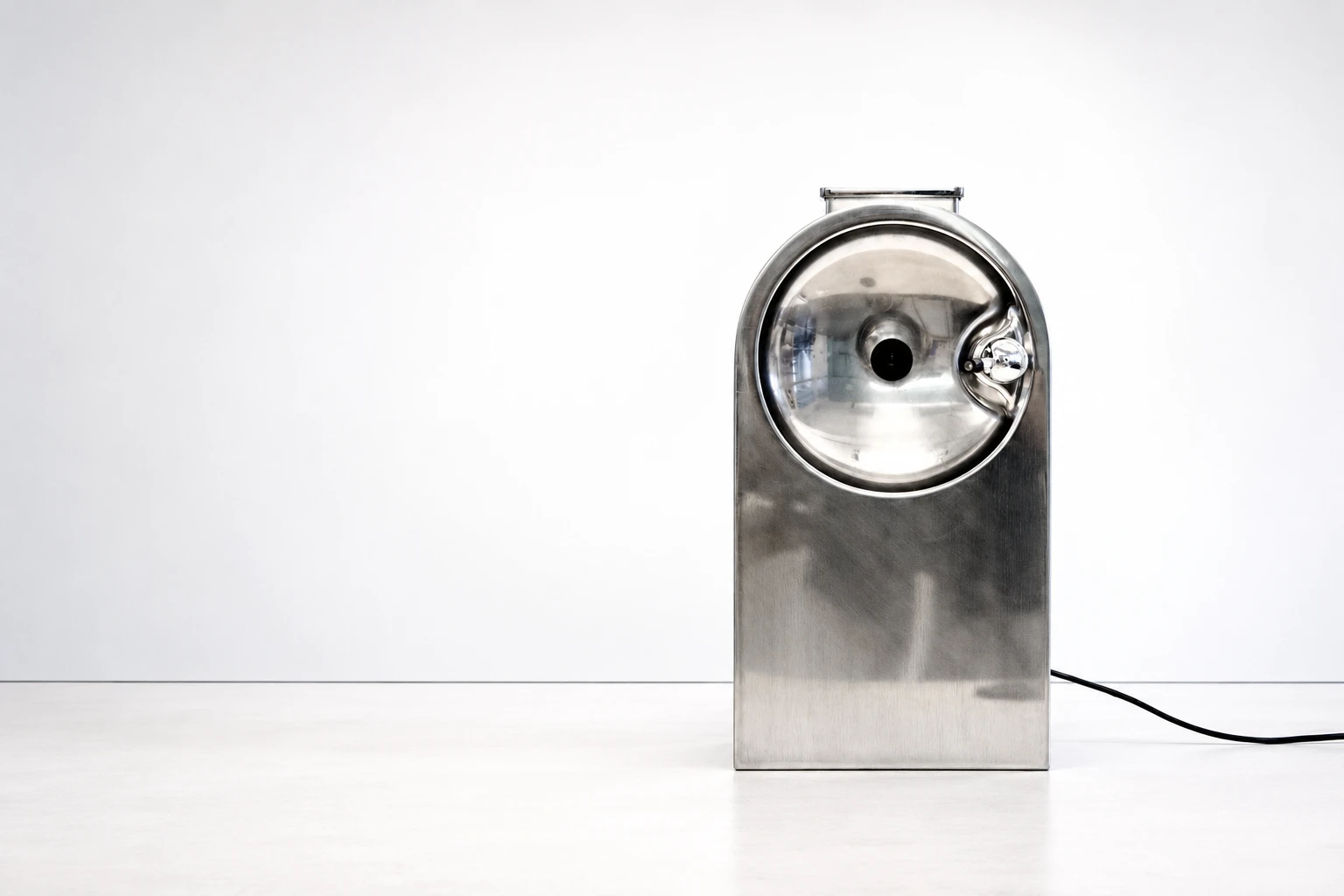
An AI bartender that uses computer vision to decide whether to serve water or alcohol.
Built with two reservoirs, a pump system, and a camera-linked onboard computer, Fido treats the body as input and hydration as output. To receive a drink, users must complete the One-Leg Stand field sobriety test. The project asks what it means to outsource agency to systems designed to “care” on our behalf.
Exhibited at TIAT · Epistemologies of Slop
View Project ImagesOne more?
Alcohol can make it easier to say yes
and harder to say no.
In a 2015 study on mice, researchers found that repeated alcohol exposure affected two dopamine-sensitive pathways differently.
D1 · Promoting action
Excitatory signals to D1 neurons grew stronger.
D2 · Suppressing competing actions
The same signals to D2 neurons showed no significant change.
Wang et al. · The Journal of Neuroscience, 2015
So I built a system that decides for you.
Fido uses YOLO, a real-time object detection algorithm, to assess your balance during a one-legged stand test, a standard field sobriety test. Based on your performance, Fido dispenses water or alcohol.
Human agency sits at the edges: you choose to take the test and whether to accept the drink. The system makes the decision in between.
But should it?
How it works.
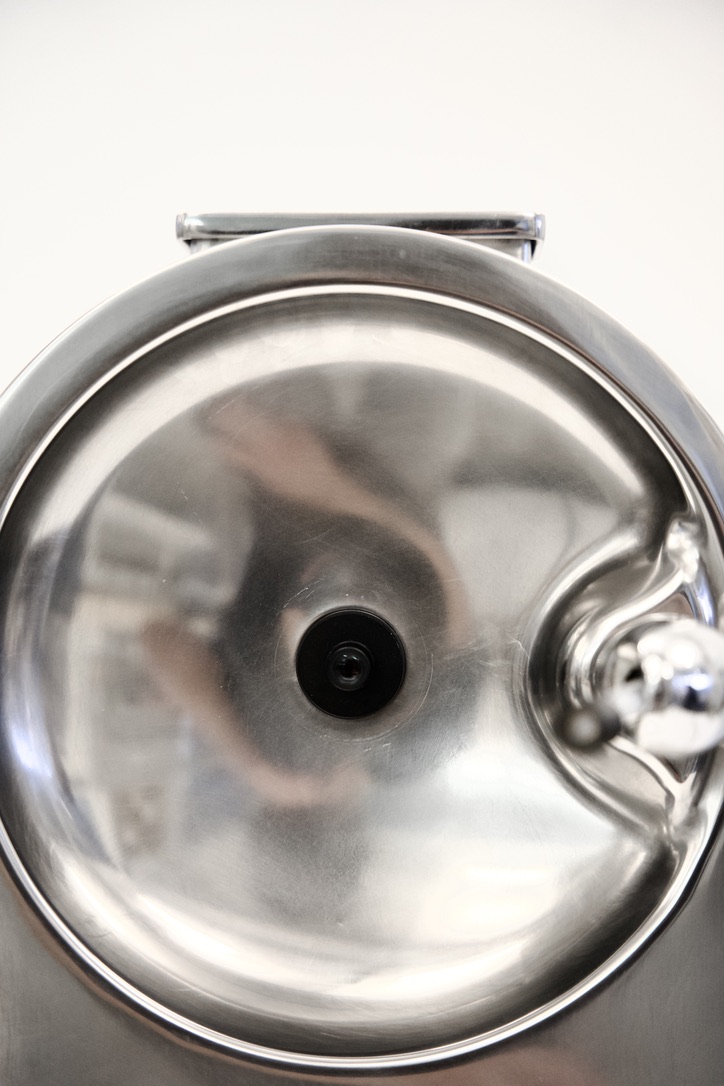
A reclaimed stainless-steel drinking fountain, hand-polished to a mirror-like shine. Inside, a Raspberry Pi 5 processes HD camera input and controls two diaphragm pumps.
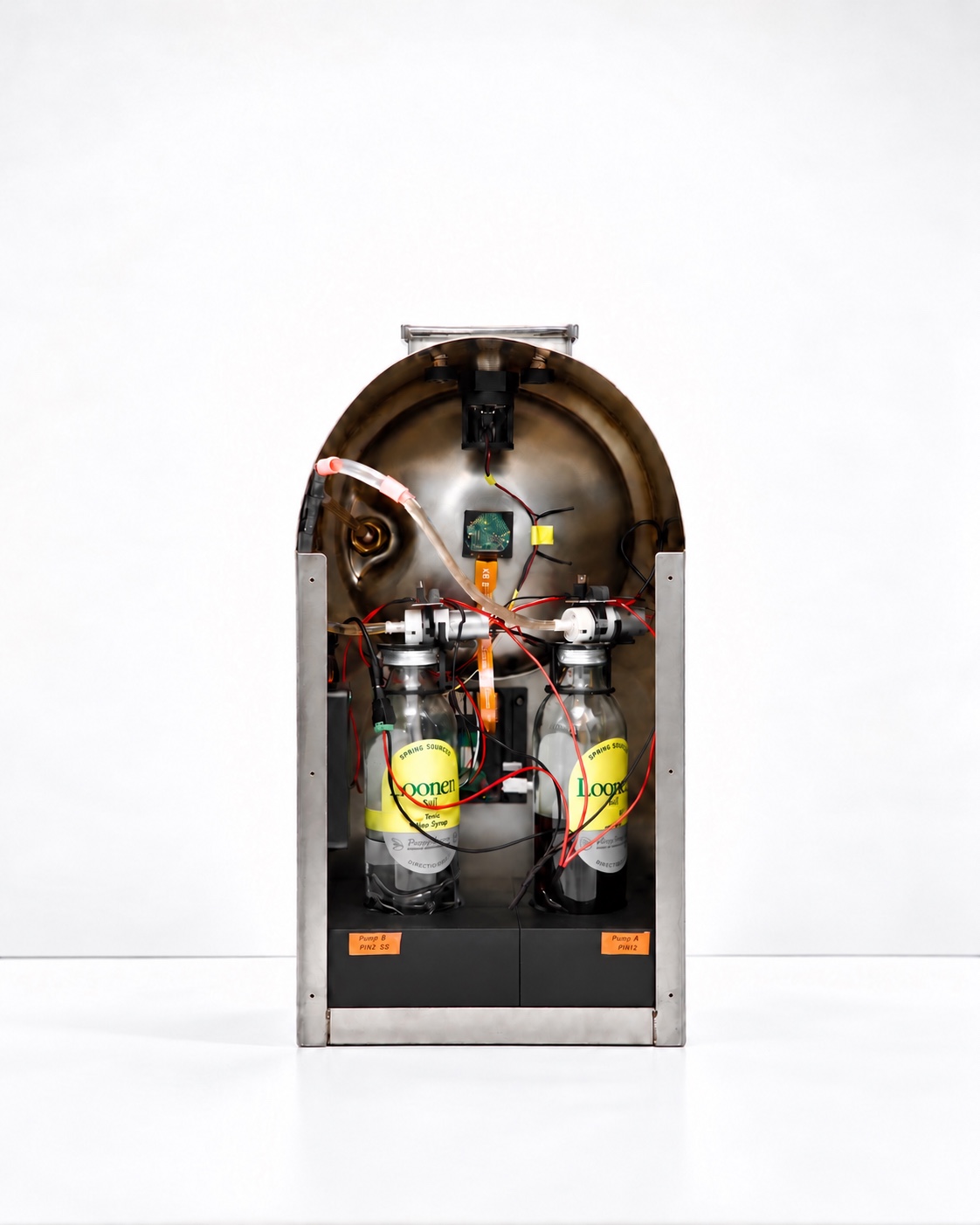
Press the button. The camera watches the stand test.
Novel interfaces
invite interaction.
Inspired by Star Wars droids, I designed Fido to feel like a character. Its form and behavior drew viewers into an encounter with embodied AI.
Viewers were generally uneasy about AI making sensitive decisions for them. For me, Fido showed how a novel interface can invite interaction while making questions of care and agency something people can experience firsthand.